GNTS1 Bluetooth Smart Sticker
A thin, disposable Bluetooth smart sticker whose secure, encrypted signal is detected by compatible devices across a rapidly expanding partner network of 100M+ participating devices — and relayed securely to the cloud for visibility through GoAndTrack.
100M+ devices in the expanding detection network
Content last reviewed: 2026-08-20 — partner-network positioning approved; imagery, model and certifications verified from approved assets
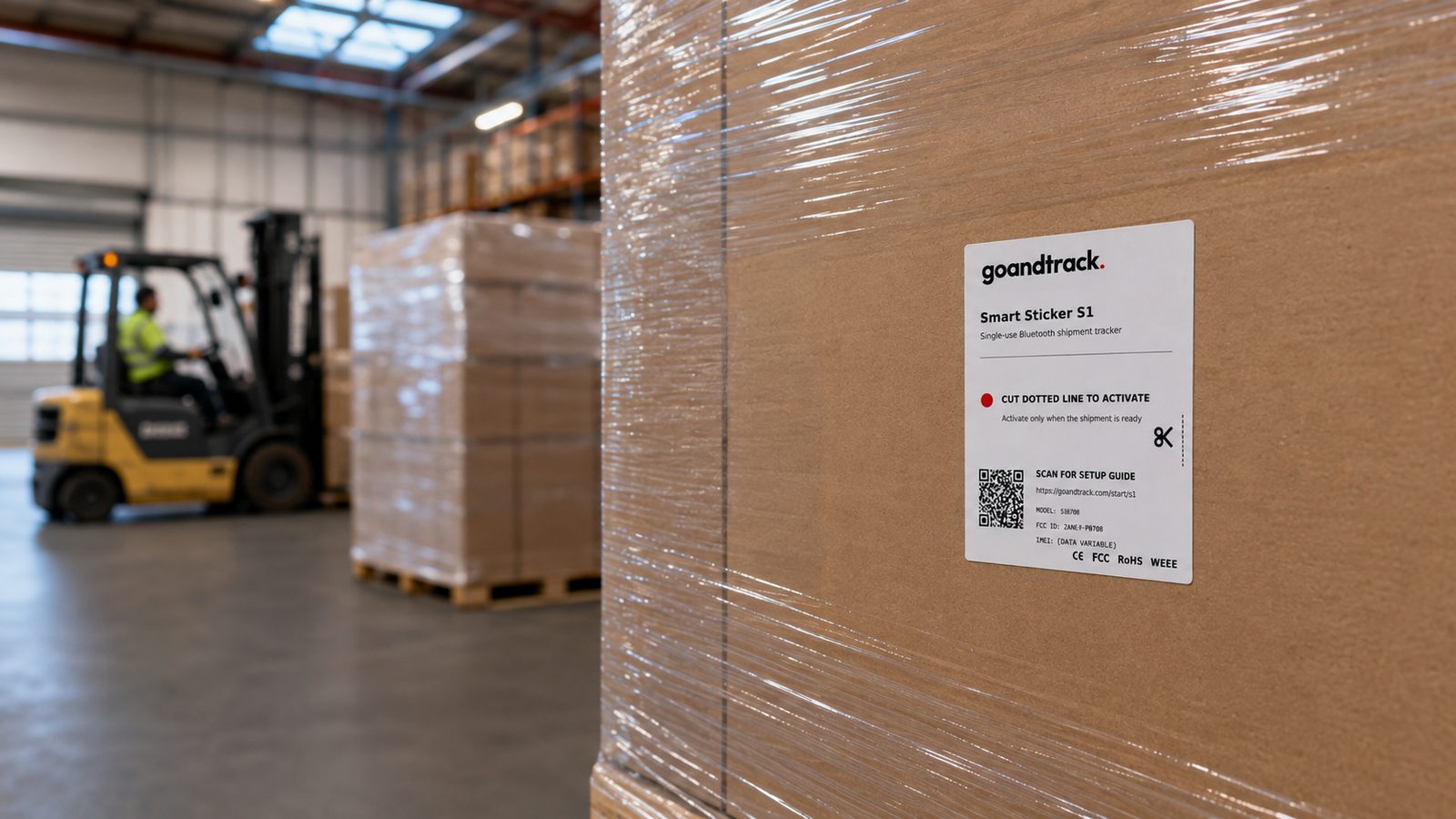
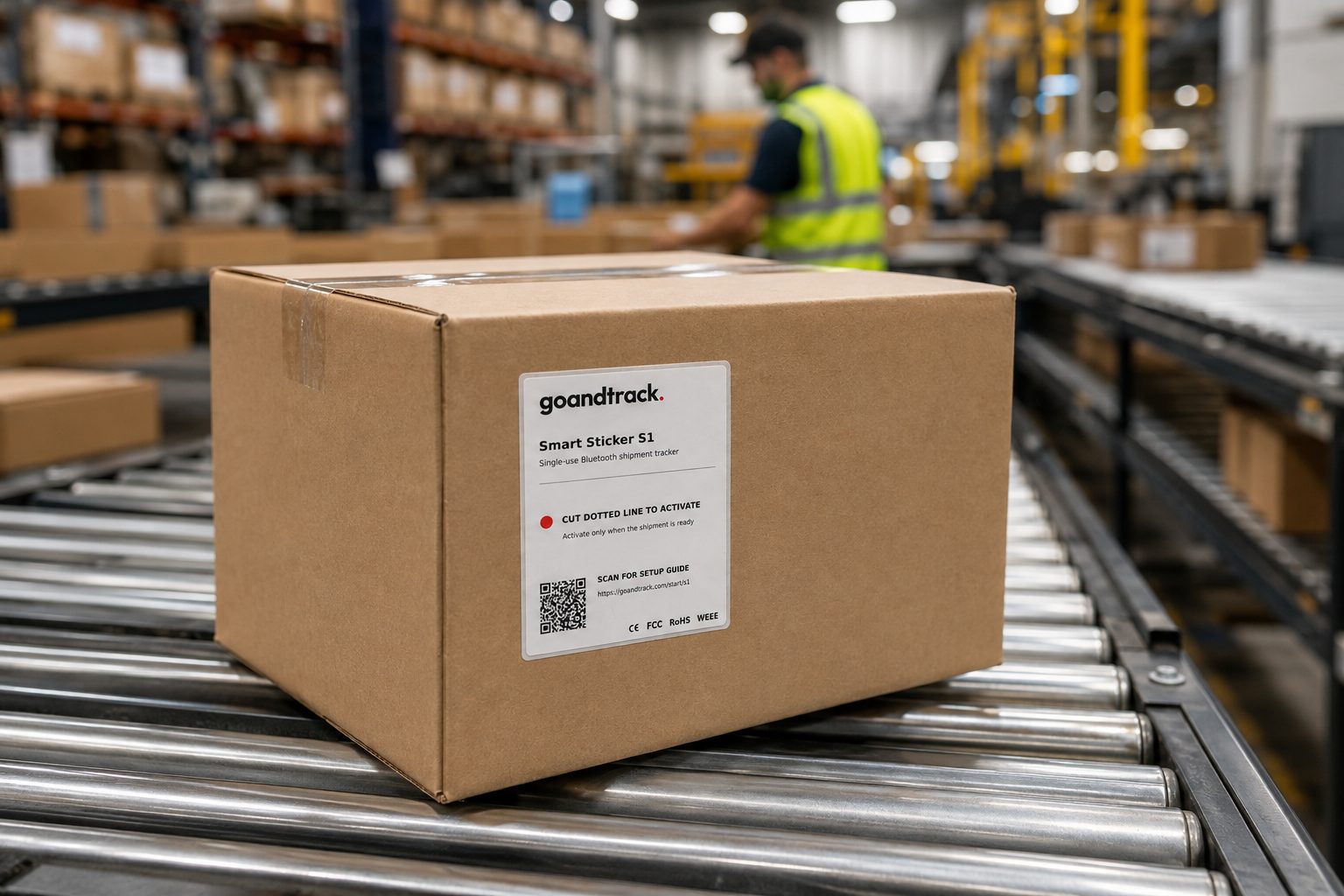
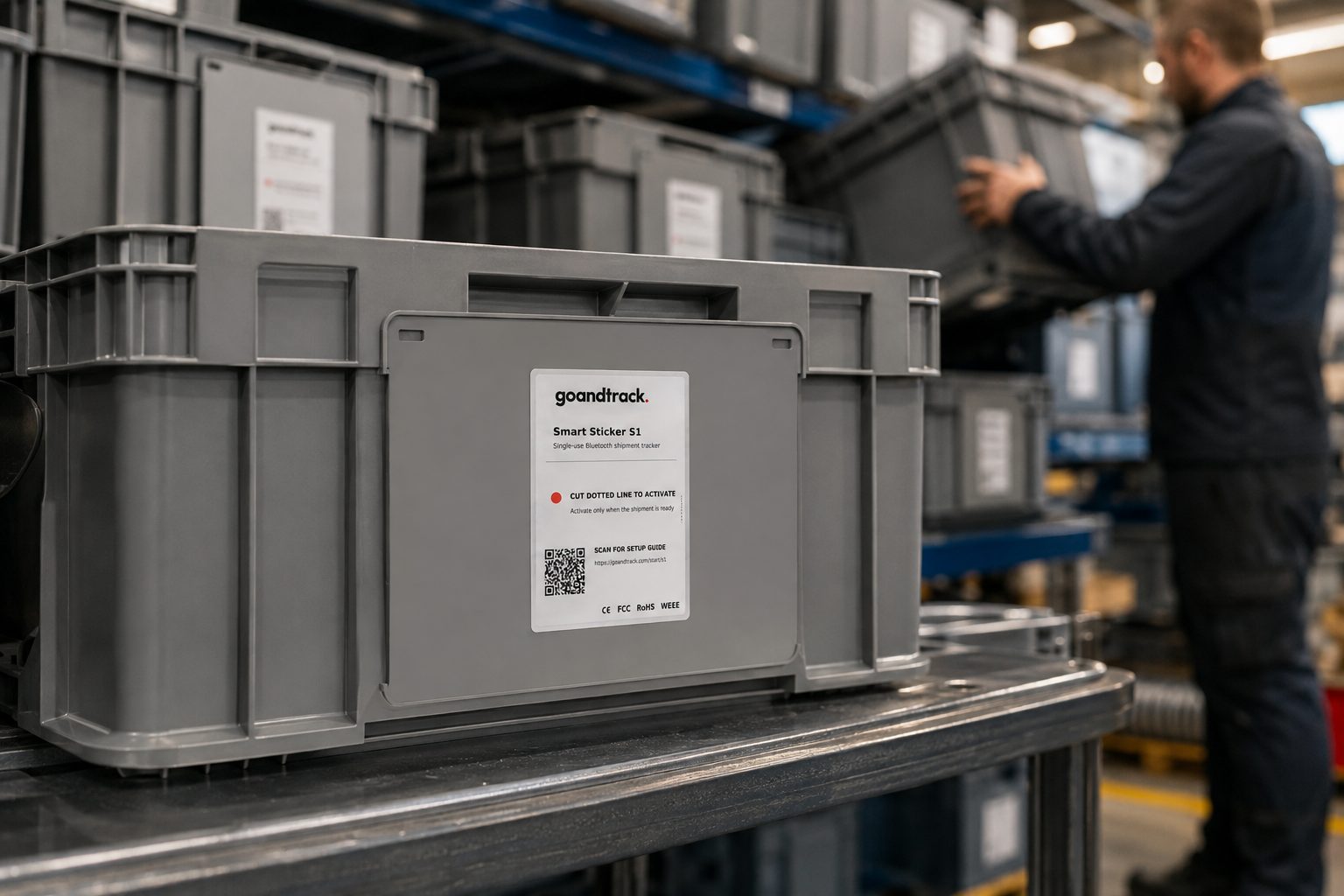
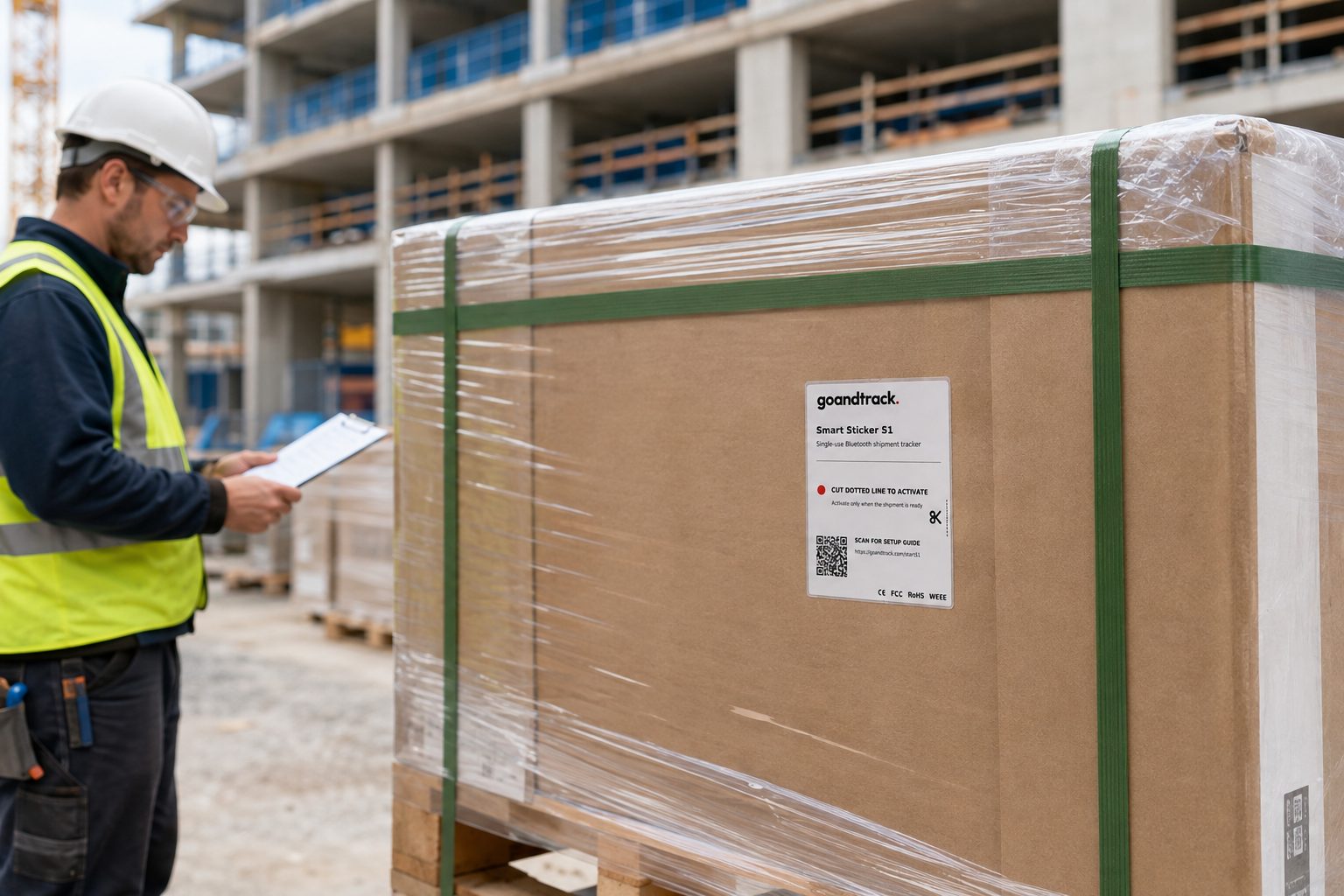
Best for
Where it fits
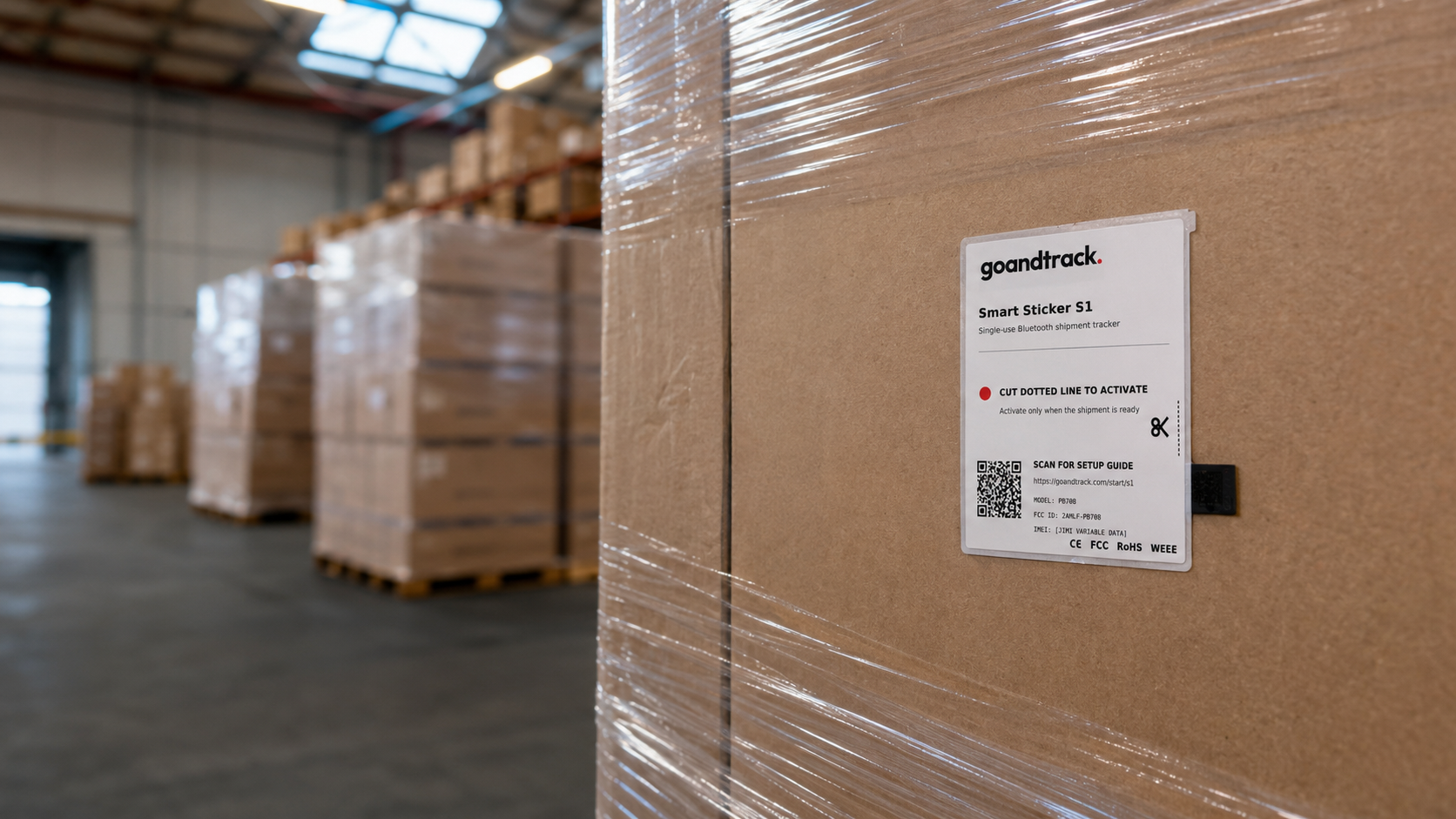
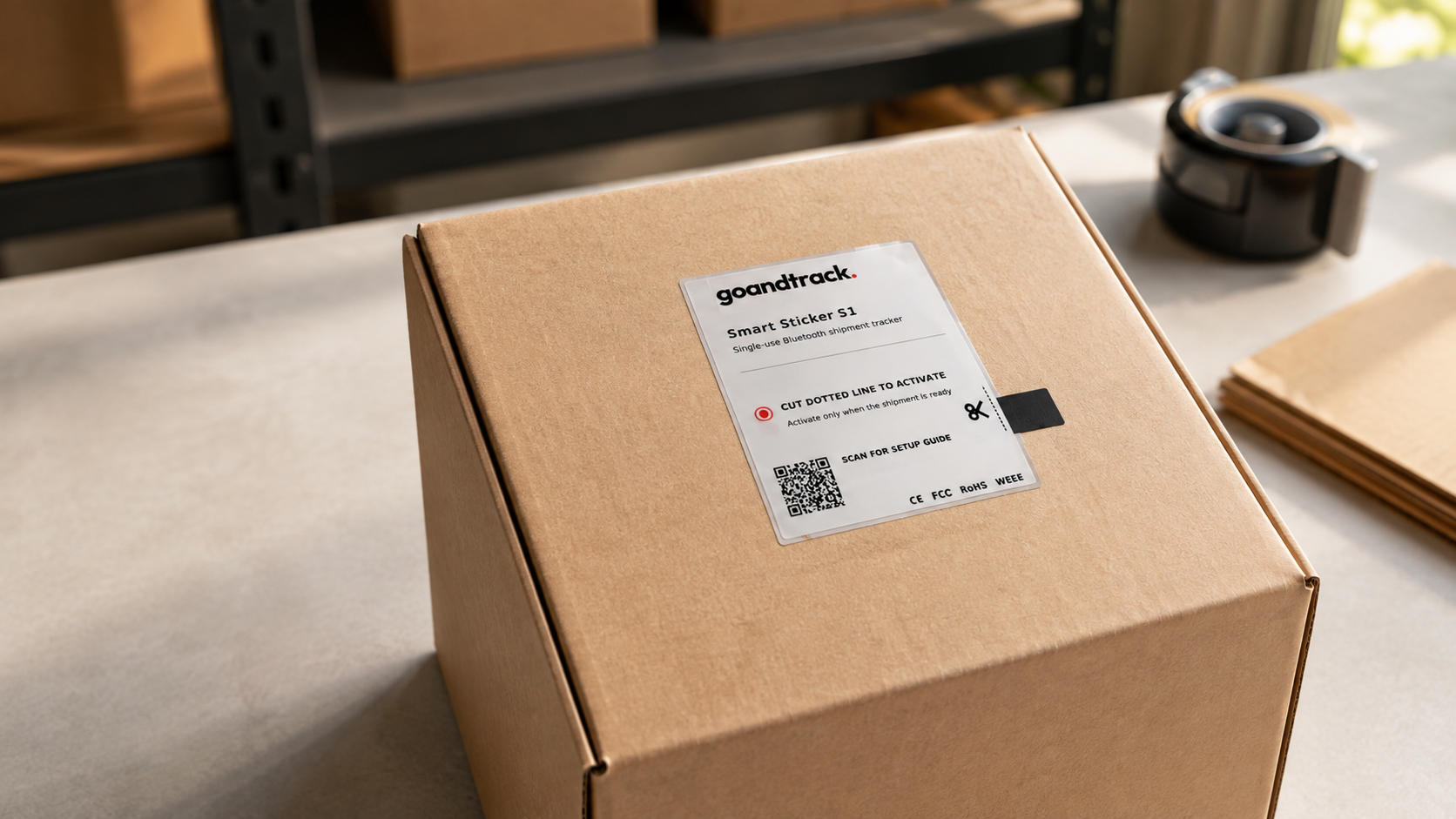
- Item- and carton-level tagging at scale
- Visibility along busy lanes, hubs and populated routes
- High-volume shipments where per-unit cost matters most
- Returnable packaging and asset visibility without per-asset SIMs
Capabilities
What it does
- Emits a secure, encrypted Bluetooth signal designed for authorised detection events
- Detected by partner-enabled smartphones, compatible wireless access points, IoT infrastructure and integrated vehicle telematics
- Each detection event is associated with the detector's available location and relayed securely to the cloud
- No SIM card, GPS receiver or cellular modem inside the sticker
- Unique ID per sticker for item-level history
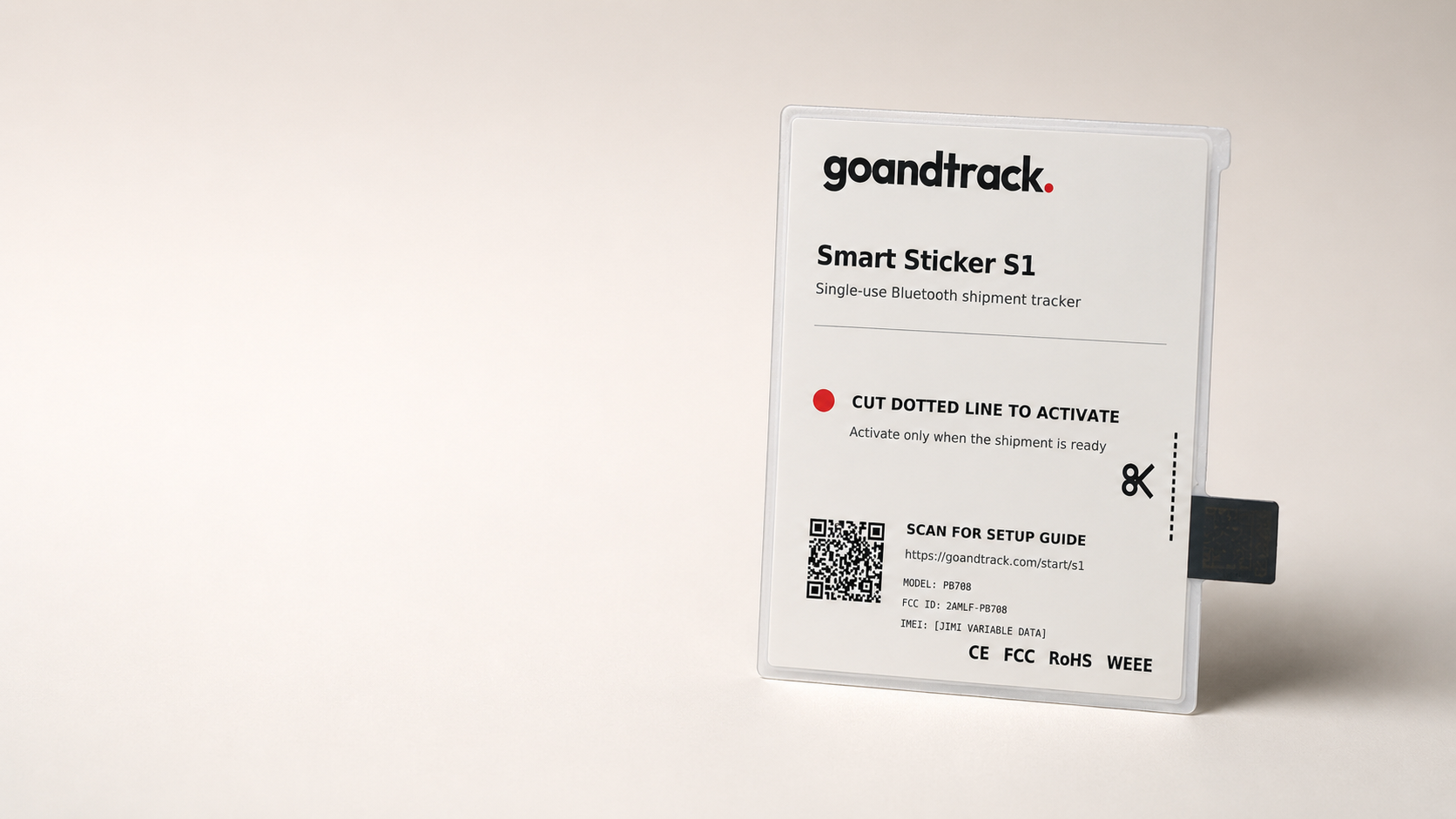
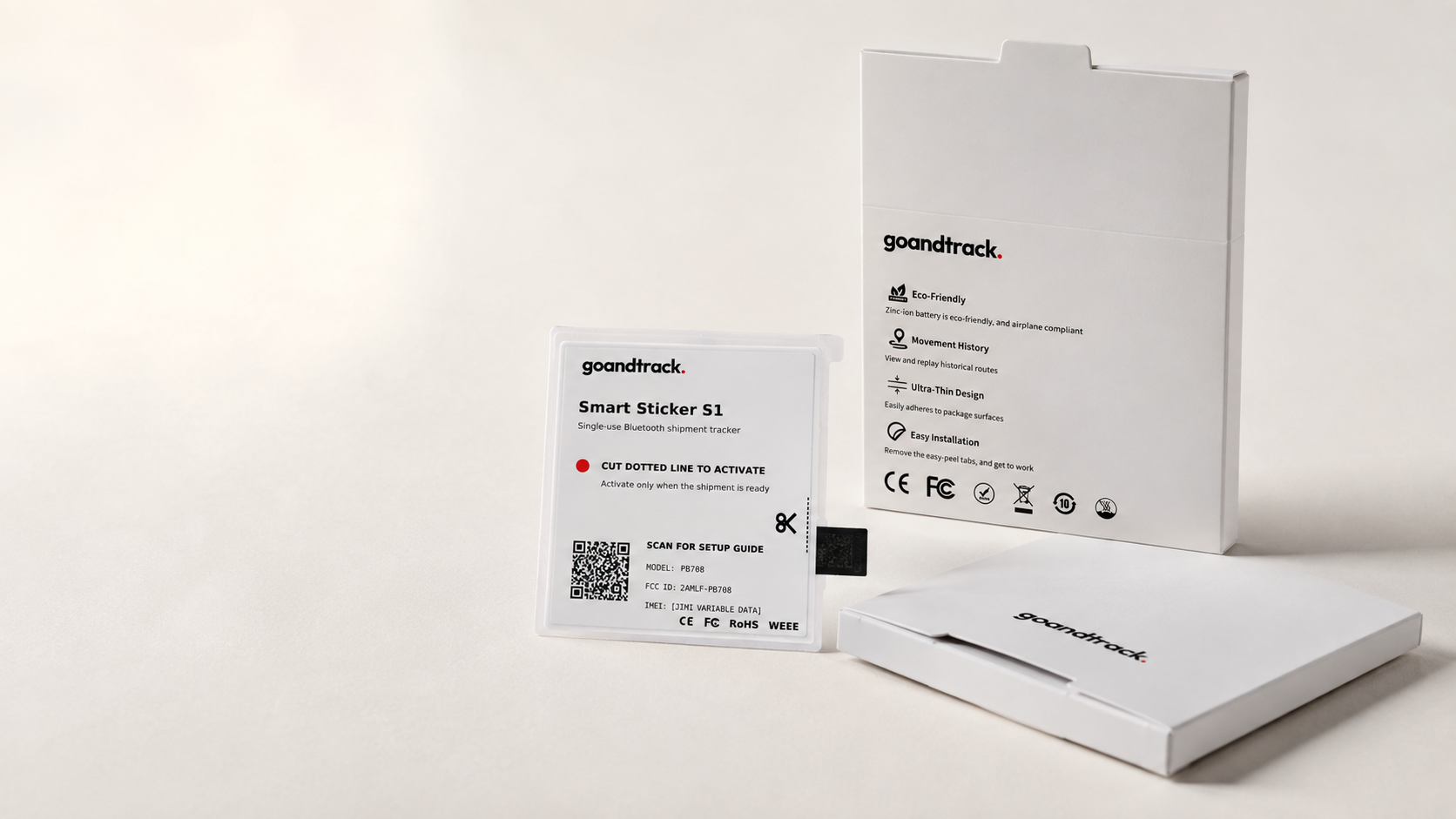
- Cut-to-activate tab — no pairing, buttons or chargers
- Setup guide printed on every sticker via QR code
- Single-use by design — disposable after delivery
Transparency
How the GNTS1 produces a location
The GNTS1 contains no GPS receiver, no cellular modem and no SIM card. Instead, it emits a secure, encrypted Bluetooth signal containing the information required for an authorised detection event.
That signal can be detected by compatible, participating devices and infrastructure — partner-enabled smartphones, wireless access points, IoT gateways and integrated vehicle telematics systems — across a rapidly expanding partner network of more than 100 million devices.
When a participating device detects the signal, it associates the detection with its available location and securely relays the event to the cloud. The resulting location event is then displayed in GoAndTrack for operational visibility, route history and supported workflows.
Detection availability and reporting frequency depend on the presence, configuration and connectivity of compatible participating devices. Network size does not guarantee detection at a particular location, on a particular route or at a fixed interval. Cellular-label performance similarly depends on coverage, configuration and operating conditions.
100M+ participating devices and rapidly expanding
The partner detector is a necessary part of the architecture — the sticker never connects to a satellite or cellular tower itself.
Specifications
The numbers — verified and pending
- Model
- PB708 (Smart Sticker S1)
- Architecture
- Secure, encrypted Bluetooth broadcast + partner detection network
- Onboard positioning
- None — detection events carry the participating detector's available location
- Connectivity
- Bluetooth Low Energy (BLE) — no cellular radio
- SIM requirement
- None — no SIM card in the sticker
- Detection network
- 100M+ participating devices, rapidly expanding
- Battery
- Zinc-ion — eco-friendly, airplane compliant
- Battery life
- Up to [X] months — interval- and condition-dependent
- Form factor
- Ultra-thin adhesive smart sticker [dimensions to confirm]
- Sensors
- [To verify against datasheet]
- Operating temperature
- [To verify against datasheet]
Specifications marked with an asterisk or shown in [brackets] are pending verification against final manufacturer datasheets. Reporting behaviour and battery life depend on configuration and deployment conditions. Always validate suitability for your application with GoAndTrack before purchase.
Activation: Cut the dotted line on the sticker's edge to activate — only when the shipment is ready. A QR code printed on every sticker links to the setup guide at goandtrack.com/start/s1.
Operating life: Up to [X] months depending on broadcast interval and conditions — confirm current figures with GoAndTrack.
Honest limits
What it doesn't do
Buying the wrong label is expensive. These are the boundaries we'd rather you knew now.
- Detection depends on the presence, configuration, permissions and connectivity of compatible participating devices
- Network size does not guarantee detection at a particular location, on a particular route, or at a fixed interval
- No onboard positioning — the sticker never computes its own location
- No onboard temperature, humidity or shock sensing [confirm variant roadmap]
FAQs
GNTS1 questions, answered straight
Does the GNTS1 contain GPS?
No. GNTS1 does not contain its own GPS receiver. It emits a secure, encrypted Bluetooth signal which can be detected by compatible devices in the partner network. The detecting device associates the event with its available location and relays it to the cloud.
Does GNTS1 need a SIM card?
No. The sticker does not need its own SIM card or cellular subscription. It relies on compatible participating devices and infrastructure to detect its Bluetooth signal and securely relay an event.
Can any smartphone detect the sticker?
Not automatically. Detection requires a compatible, participating device with the necessary partner technology, configuration, permissions and connectivity — not every nearby phone will detect or report the sticker.
How large is the detection network?
The partner ecosystem currently includes more than 100 million participating devices and is rapidly expanding. This describes the scale of the overall network — not guaranteed device density or coverage at every location.
Is GNTS1 continuously tracked?
No fixed detection interval is promised. A location event is created when the sticker encounters compatible participating infrastructure capable of detecting and relaying its signal.
How is the LL100 different?
LL100 has its own cellular connection and can send information to the cloud through mobile networks. It also supports multiple location inputs and condition sensors. GNTS1 instead uses an external partner-device network to detect and relay its Bluetooth signal.
How do I activate the sticker?
Cut the dotted line on the sticker's edge — do this only when the shipment is ready to move. There's no pairing, app setup or charging. A QR code on every sticker links to the setup guide at goandtrack.com/start/s1.
How long does the battery last?
The S1 runs on a zinc-ion battery — eco-friendly and airplane compliant. Battery life is measured in months and depends on the broadcast interval and operating conditions. We use “up to” figures deliberately — confirm the current rated life for your intended configuration with GoAndTrack.
Can I use the GNTS1 on air freight?
The S1's zinc-ion battery is airplane compliant per the manufacturer's packaging, and the sticker is Bluetooth-only with no cellular radio. Airline and IATA rules still apply and vary by carrier — confirm acceptance on your specific routes with GoAndTrack before booking air freight pilots.
Need position anywhere, without readers?
A cellular-enabled smart label that determines or assists its location using GNSS, Wi-Fi, Bluetooth and supported network methods — then transmits location and condition data to the cloud over its own cellular connection.
Not sure which label fits your lanes?
Tell us about your shipments and we'll tell you honestly which architecture fits — and when neither does.